Last updated November 22, 2026
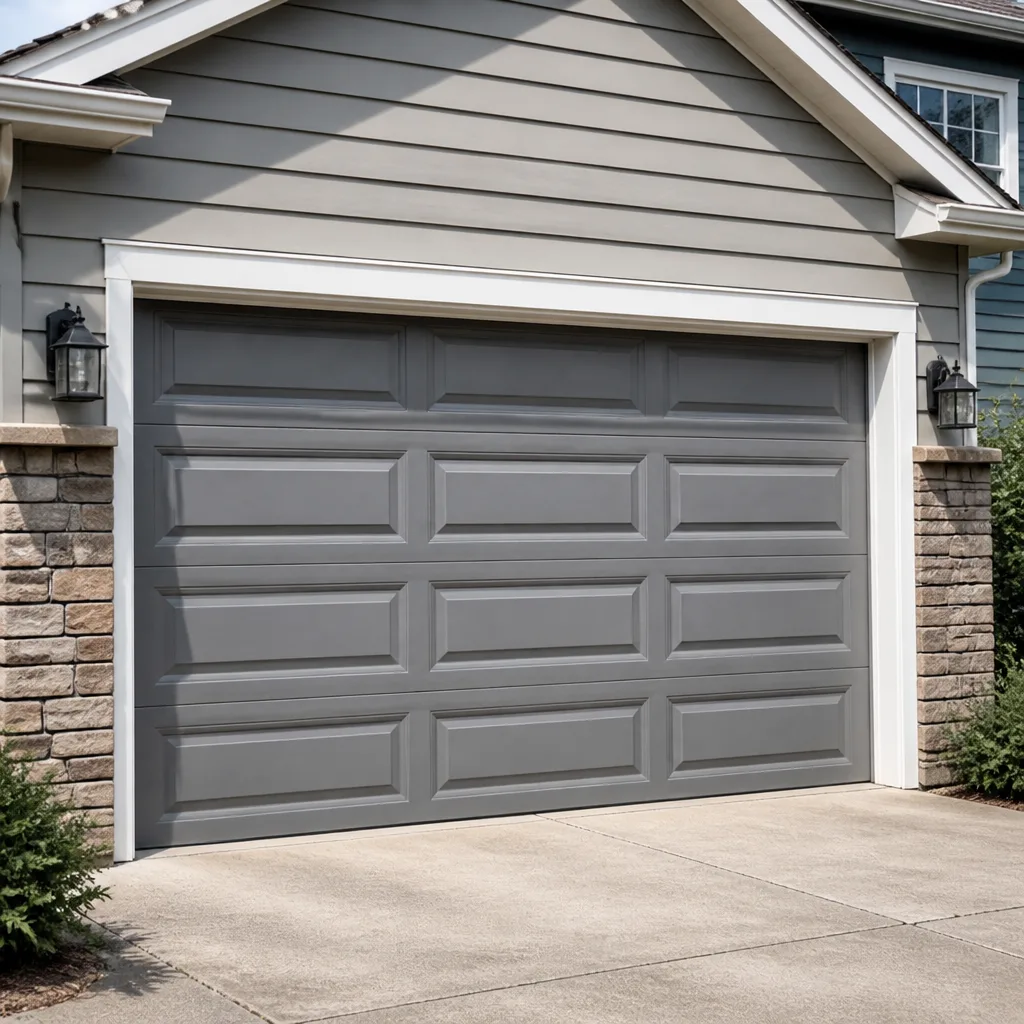 Raised-panel steel
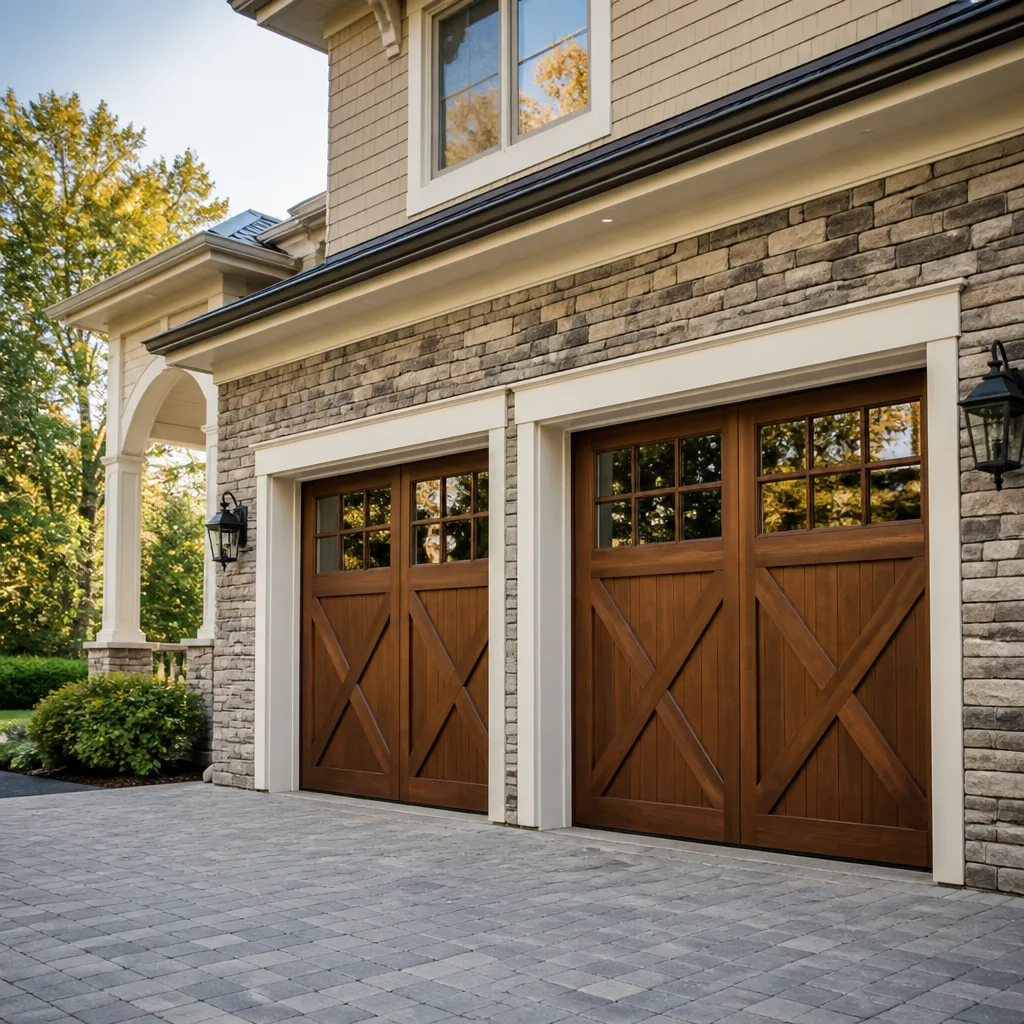 Carriage house
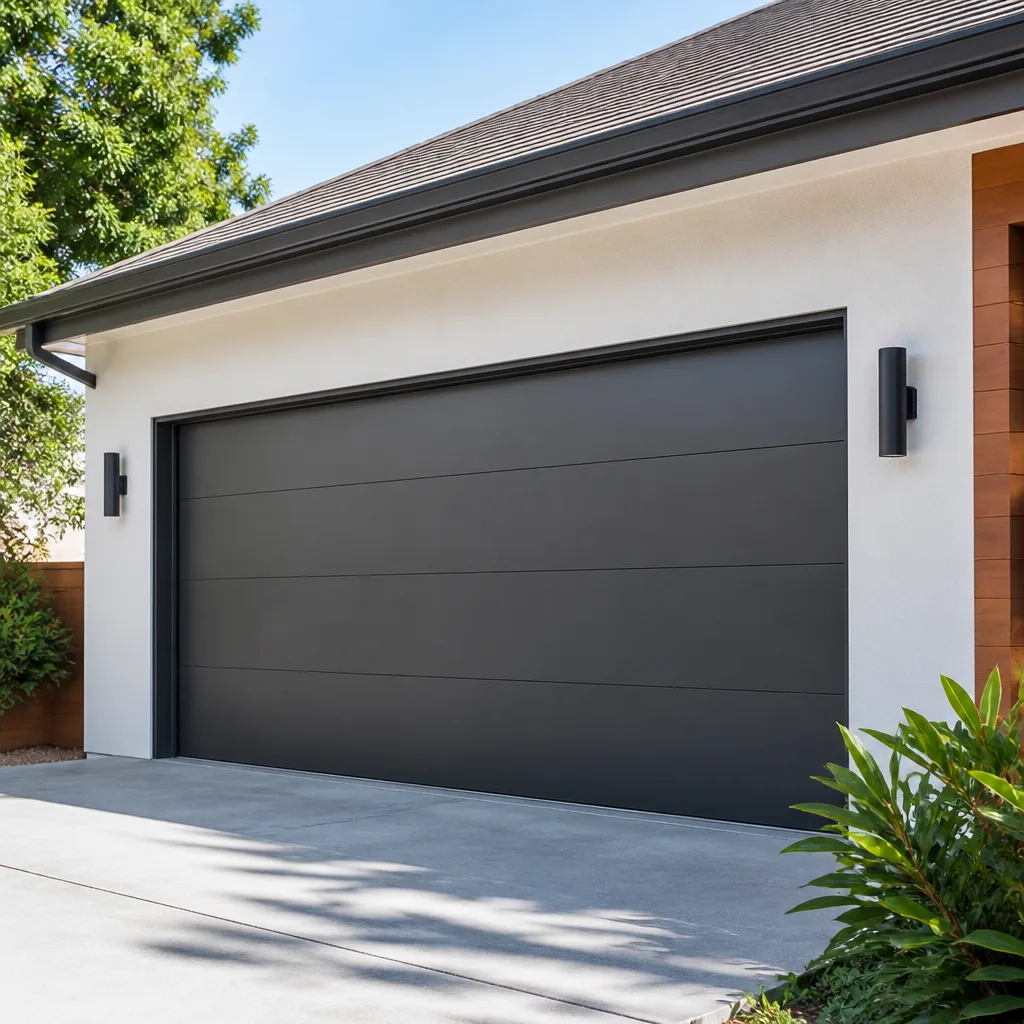 Modern flush
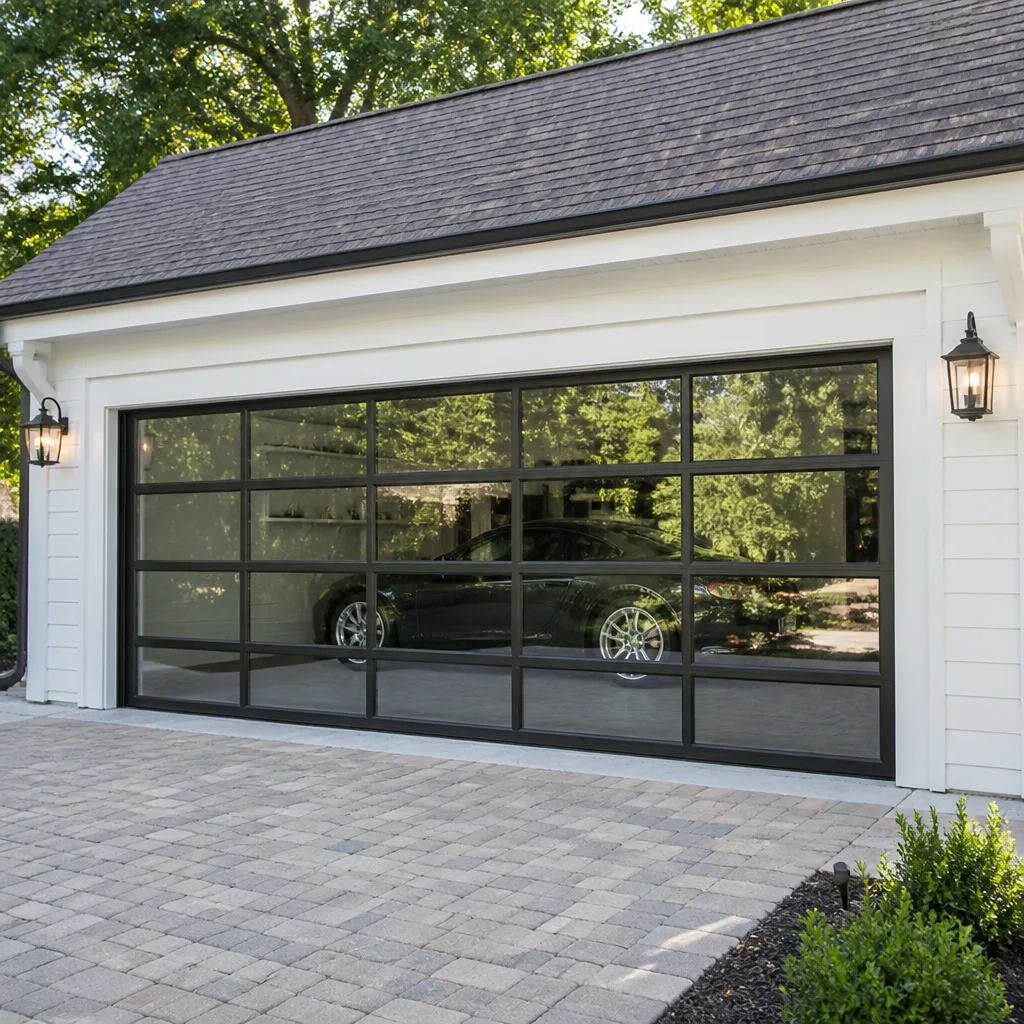 Full-view glass
 LiftMaster openers
 Chamberlain openers
Full 25-point door and opener safety check with every visit - springs, cables, rollers, tracks, and your LiftMaster or Chamberlain opener included
You get a price before we start. It does not change when the pro arrives.
Get your free estimateDIY vs Professional Garage Door: The New Rochelle Homeowner’s Decision Guide
Most homeowners who get hurt working on a garage door are not clumsy or inexperienced. They’re capable people who fixed a faucet last month and figured a door couldn’t be much harder. That assumption holds right up until the moment it doesn’t. The real dividing line between DIY and professional garage door work in New Rochelle isn’t skill level or confidence. It’s the specific task in front of you. Some garage door jobs are genuinely fine to handle with a ladder and an afternoon. A handful of them carry stored mechanical energy that can injure you before you have time to react, and those are a different category entirely. This guide draws that line component by component, so you know exactly which jobs are safe, which aren’t, and where a DIY attempt quietly costs more than a service call would have.
Quick Answer
In New Rochelle, most garage door tasks split cleanly: bottom seal replacement, roller swaps on extension-spring doors, opener remote reprogramming, and minor track adjustments are reasonable DIY projects. Torsion spring work, cable replacement under tension, and major track straightening are not, because those components hold stored mechanical energy that can release in an instant. When a job involves springs or cables, call a specialist.
Styles & brands we work with
- Raised-panel steel
- Carriage house
- Modern flush
- Full-view glass
- LiftMaster openers
- Chamberlain openers
Table of Contents
- Where the Line Actually Falls
- The Task-by-Task DIY Matrix
- Why Torsion Springs Are in a Separate Category
- The Cost Reality Check: When DIY Actually Saves Money
- Parts Sourcing Problems New Rochelle Homeowners Run Into
- What to Do Before a Technician Arrives
- Common Mistakes to Avoid
- When to Call a Professional
Where the Line Actually Falls
The usual DIY-versus-professional debate gets framed around people: is the homeowner handy enough, patient enough, careful enough? That framing is wrong, and it’s why so many garages end up half-disassembled by the time a technician gets called to finish the job.
The correct frame is mechanical. Every task on a garage door falls into one of three buckets based on what could go wrong:
- Low-risk, high-accessibility jobs. These involve components with no stored tension and no effect on the door’s structural support. If you get it wrong, the door still works or the fix simply doesn’t hold. Nothing snaps.
- Moderate jobs with a real learning curve. These are doable but require understanding how the door’s balance system works and where the load sits. Getting them wrong causes repeat failure rather than injury.
- Jobs where the stored energy is the whole problem. These involve springs and the cables under tension from those springs. The component is under load before you touch it. Removing one fastener at the wrong moment releases that load through your hands or past your head.
In our experience, nearly every garage door injury at a home falls into that third category, and nearly every costly DIY correction does too. That’s the line. Not whether you can turn a wrench, but whether the part you’re touching is holding energy.
The Task-by-Task DIY Matrix
Here’s how we’d lay out the typical jobs across the door and opener systems, drawn from the failures we see in New Rochelle. Treat this as a map of where your own capability is the limiting factor and where it isn’t.
Safe to Handle Yourself
- Bottom seal or weatherstripping replacement. The rubber seal along the floor takes wear from weather and door movement; swapping it requires no contact with the balance system. Note that New Rochelle summers push humidity against that bottom seal and winters freeze moisture into it, so this is one of the most frequently needed cheap fixes on any door in the city.
- Roller swaps on extension-spring systems (door in the down position). On doors that use extension springs along the horizontal tracks, rollers can be replaced with the door closed and the load relaxed. On torsion-spring doors, the tension story is different, and we’d rather you didn’t guess which system you have.
- Remote reprogramming. On a Chamberlain or Genie opener, re-pairing a remote is a documentation exercise, not a mechanical one. The manual or the opener manufacturer’s own app handles it.
- Light bulb and battery replacement on openers. Routine, harmless, and worth knowing how to do.
- Repainting or cleaning the door panels. Cosmetic work doesn’t touch the mechanism.
- Minor track realignment where the track is only slightly out of plumb. A small nudge back to square, done gently with the door closed and the opener disconnected, is reasonable for a careful homeowner.
Not for DIY
- Torsion spring repair or replacement. The single most common source of serious garage door injuries.
- Extension spring replacement if the door is wound or the spring shows any sign of strain. These also hold load; the risk is lower but real.
- Cable replacement under tension. Cables carry the full load of the door; a slipping or failing cable can whip. Replacing them without properly releasing the stored tension is dangerous.
- Major track repair, especially where the door has come off the track or the track has been bent in a vehicle impact. A door off its tracks is under unbalanced load and can come down hard.
When the door’s structural balance is at issue, the honest answer on the repair you need is straightforward: garage door repair is a specialist’s job. A slipped spring or a bent track is not a learning opportunity.
Why Torsion Springs Are in a Separate Category
Picture a metal bar the length of your car’s hood, coiled tight enough to hold a door that weighs a few hundred pounds in balance. The energy stored inside a wound torsion spring, at the point where it’s fully tensioned, is comparable to what you’d get from a heavy weight held a good distance off the ground. Then imagine releasing that weight in a fraction of a second, with no warning, at the height of your hands and face.
That’s what a torsion spring failure does. It doesn’t creak and give you a warning. The spring doesn’t age slowly into failure either; it fails when the metal reaches the end of its fatigue life, which is why a spring that has cycled tens of thousands of times over a decade can snap on a quiet Sunday morning in New Rochelle without any trigger from you. A cable that’s under load behaves the same way.
This is why a wound spring is a different category. At the moment it’s installed, the spring is literally held in place by winding bars that carry the tension while the technician turns the drum. If a winding bar slips, or if the wrong bar size is used, the release happens in an instant. Even experienced general contractors, people who can rebuild a bathroom, call a garage door specialist for this job and we see it every week. And on a cable that has lost its tension and is under load, the same principle applies: the energy stored in the spring is being carried through the cable, and cutting or releasing the cable at the wrong moment releases both.
What we’d tell any New Rochelle homeowner is this: the moment you find yourself holding a winding bar or a 9/16-inch socket near a torsion tube, stop and call. Springs aren’t a task where you scale up from simpler jobs; there’s no ramp.
If you have a broken spring, our garage door spring repair page covers how the process works, including matched-pair replacement.
The Cost Reality Check: When DIY Actually Saves Money
DIY saves real money on the low-risk list. A bottom seal swap is a fraction of a service call; a roller replacement on a relaxed spring system is similar. Those jobs pencil out.
The torsion spring and cable jobs are a different calculation. Here’s what typically happens when a homeowner attempts a spring replacement with an aftermarket spring of the wrong strength. The door comes down too heavy, the opener strains and begins failing, and eventually the tech is called for a spring that couldn’t hold the door, an opener that’s been running overloaded, and a door that needs rebalancing. The service call then covers the original job plus a correction, and if the door has fallen, the prices run higher still.
The other cost driver is what happens to the door when a novice winds a spring on a door that wasn’t supported correctly. A door that drops suddenly with a broken latch or a bent track costs more to fix than a spring replacement alone.
For reference, a professional spring repair in New Rochelle usually comes in at a single line-item service call, and it’s quoted before work starts. We don’t publish fixed prices because door weights and spring configurations vary, but the estimate is agreed up front, not adjusted afterward.
One honest caveat: if you’re reasonably mechanical and the task is on the safe list, we’re not going to pretend you need us. We work on the door you have, whether that’s a Clopay you bought a decade ago or an Amarr installed last year. If you can safely swap a bottom seal, do it, and call us for the spring when the time comes.
Parts Sourcing Problems New Rochelle Homeowners Run Into
The most common DIY failure isn’t the install itself, it’s the part. Garage door springs aren’t a standard size. They’re engineered to a specific door: the coil diameter, wire gauge, and length each matter for the door’s weight. The spring that works for a door in a neighboring house won’t necessarily hold yours, and the prepackaged springs on a home improvement store shelf are sold by broad size categories that often don’t match the door in your garage.
New Rochelle makes this worse in a specific way. Plenty of the doors in older homes around the city were installed decades before the current sizing conventions, and the original spring spec may not line up with any modern off-the-shelf part. The same is true of some Clopay and Amarr doors from earlier production years. We’ve seen a homeowner who bought a “universal” spring, installed it, and found the door only opened partway before the opener strained and tripped. That spring’s length was wrong for the door’s weight.
Cables have the same issue: the diameter, the length, and where they seat on the drum are all specific. The cable that looks right on the shelf often isn’t.
What we do differently is match the replacement spring to the door’s actual weight and configuration rather than to a generic label. That’s one of the reasons we work on the door you have rather than pushing a replacement; getting the right spring is often a case of measuring, not replacing.
What to Do Before a Technician Arrives
A few things you can do before the tech gets there could save you a repair or at least make the visit more accurate. The trick is knowing which actions help and which ones compound the problem.
Do This
- Stop using the door. Once the spring’s broken or the door’s off the track, every cycle puts more stress on the components that are still working.
- If your car is inside and you need it out, disconnect the opener. Most openers have a manual release; pulling it lets you raise the door by hand. But if the spring is broken, the door is much heavier than usual and may not lift cleanly. If it won’t lift with reasonable effort, don’t force it.
- Note what happened and when. Did the spring snap loudly, or did the door stop partway? Did the opener strain, or did the door drop? That detail saves diagnosis time.
- Photograph the mechanism. The torsion bar, the spring, the opener rail, and the tracks. Your photos tell the tech what to bring.
- Check for signs the stress is spreading. Look for sagging cables, a door that’s sitting crooked, or the opener showing an error code (a Chamberlain or Genie will usually flash a pattern). Note it down.
Don’t Do This
- Don’t try to force a stuck door up or down. If the spring has failed and the door is heavy, forcing it can bind the tracks and turn a spring repair into a track repair too.
- Don’t cut the tension off a cable with the door down. If a cable’s still attached to a wound spring, it has stored energy. Cutting it releases that energy unexpectedly.
- Don’t run the opener repeatedly to “see if it’ll catch.” That strains the opener and can burn out a motor that would otherwise survive the spring repair.
- Don’t try to raise the door by hand once the tracks look bent. Let the technician assess the tracks first.
If the door is your only exit from the garage and it’s stuck, that’s an emergency. Our New Rochelle Garage Door Repair Co team handles emergency service for doors that leave a home unsecured or a vehicle trapped. We can’t promise a time, but we can confirm whether same-day emergency service is available when you call.
What Homeowners Can Handle Around the Door
The parts of garage door ownership that don’t involve the mechanism are often where a homeowner can save the most over time.
- Lubrication. Rolling door hinges, rollers, and the opener chain benefit from periodic lubricant. This is genuinely fine to do and prevents a lot of sticking and squeaking.
- Visual inspection. Look for fraying cables, a sagging door, springs with visible gaps or rust, and rust on hinge pins. Catching a worn spring early gives you a maintenance window instead of an emergency call.
- Opener maintenance. Testing the safety reverse and checking the door balance by hand works on most openers and is worth doing a couple of times a year. If the door doesn’t balance, that’s a spring concern, not an opener concern.
- Clearing the tracks. A track full of debris or a slightly bent track at the entry point can be cleaned or adjusted with care; major damage is a different story.
- Panel washing and repainting. Cosmetic work on the door panels usually improves appearance without touching the mechanism.
What all of this avoids is the classic mistake of someone who’s spent an hour trying to make a door work and has made a manageable spring problem into a spring-plus-track-plus-opener problem. We’ve seen that happen dozens of times in New Rochelle; the correction is always more expensive than the original service call would have been.
When the Opener Is the Problem
Not every unresponsive door is a spring failure. A door that won’t move at all, or moves only partway, or whose opener strains under load has a different puzzle. If the opener has power but won’t lift the door, that’s either a tensioned or broken spring, or an opener issue like a stripped gear, a worn drive, a failed circuit board, or a sensor alignment problem.
Reprogramming remotes and clearing sensor obstructions are reasonable DIY tasks on most openers. So is replacing the opener’s battery or its light bulb. What’s not reasonable is opening up the opener housing to replace a gear or capacitor without training, especially on units from brands like LiftMaster or Chamberlain that run at line voltage.
If the opener is straining, don’t keep running it. A door with a failing spring is much heavier than the opener is designed to lift, and repeated attempts can strip the drive. Our garage door opener repair team can diagnose which component is failing, whether the door or the opener is at fault, and what the fix costs before any work starts. It’s a common call, and we’d rather see it before the opener takes damage from a struggling door.
See the difference
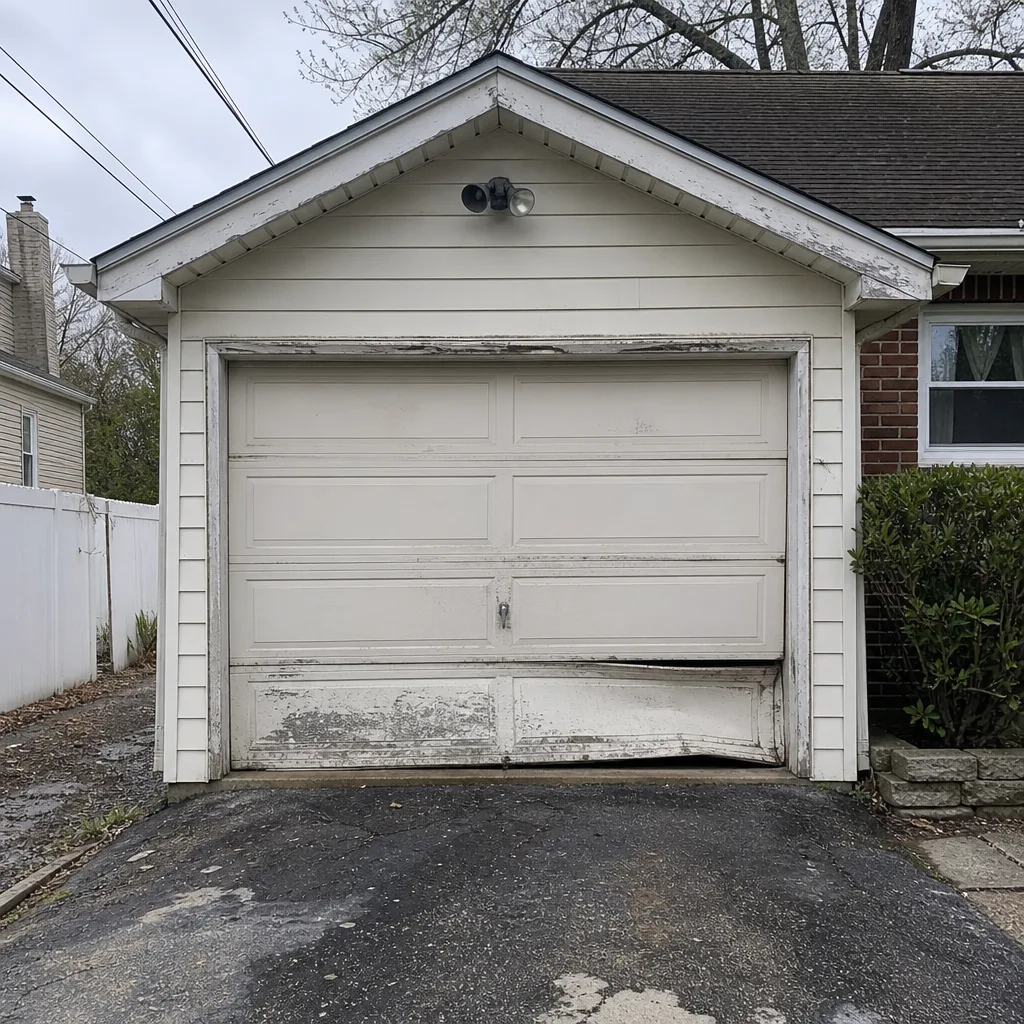 Before
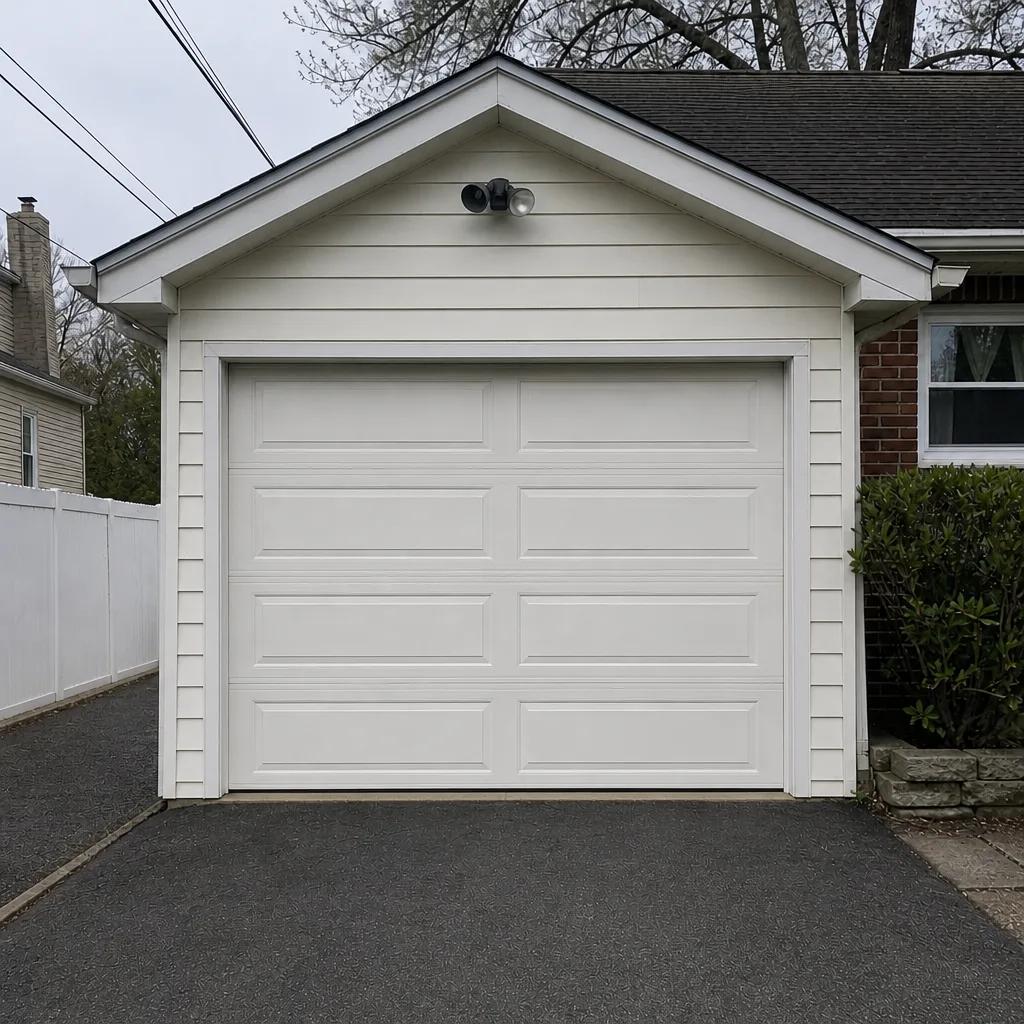 After
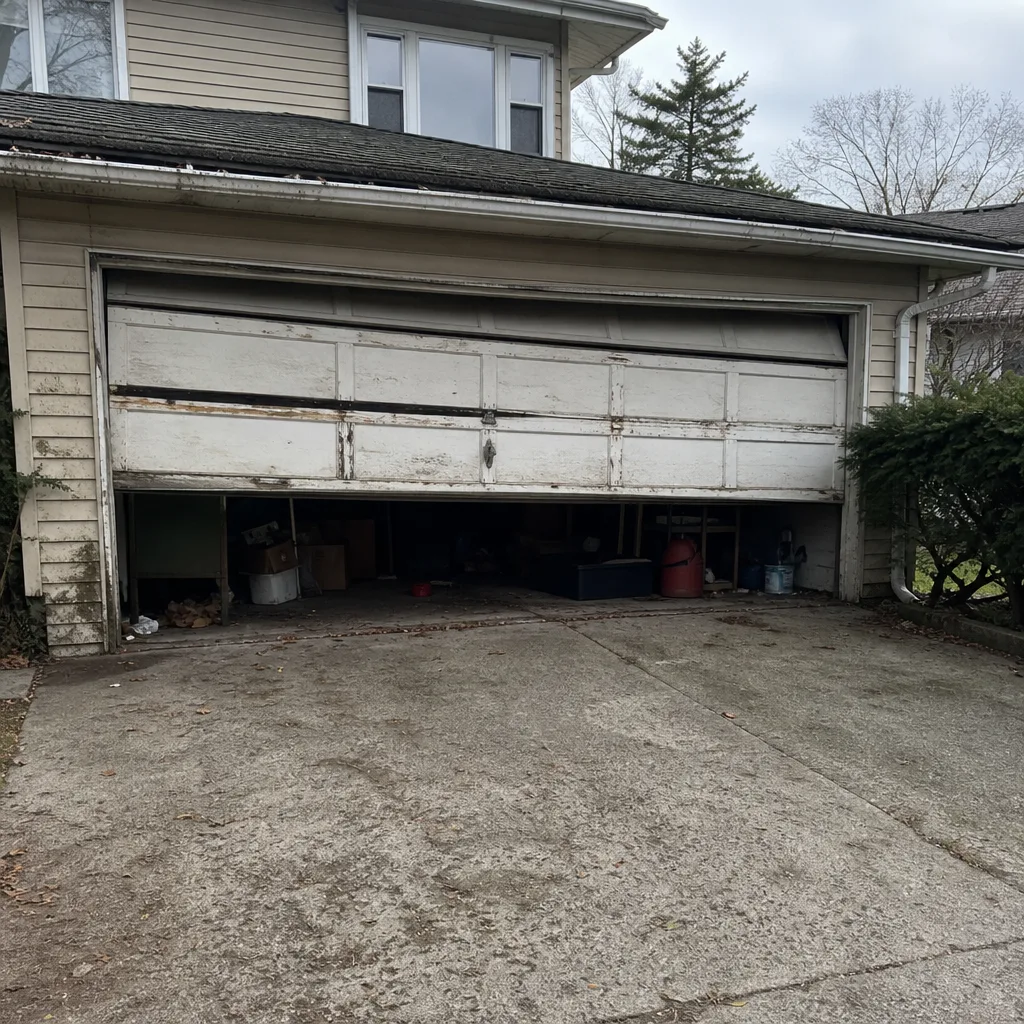 Before
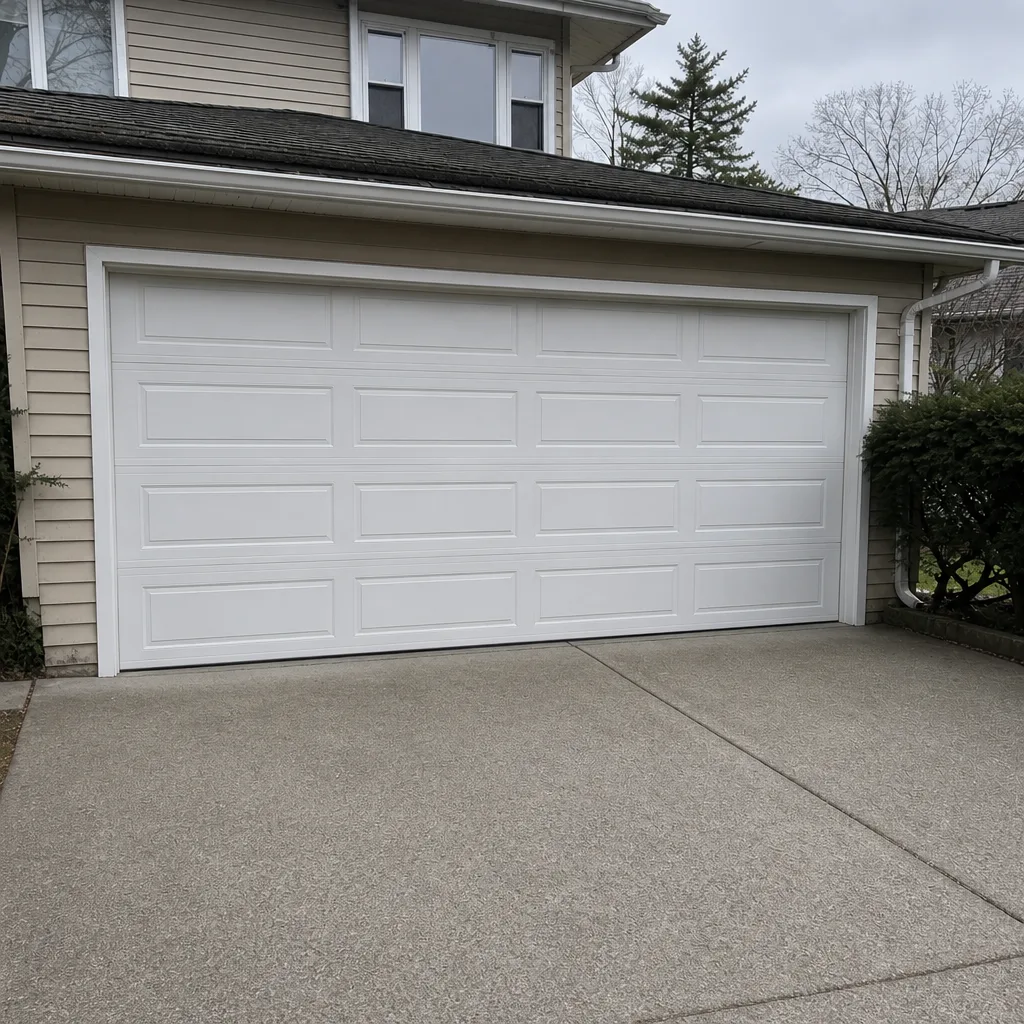 After
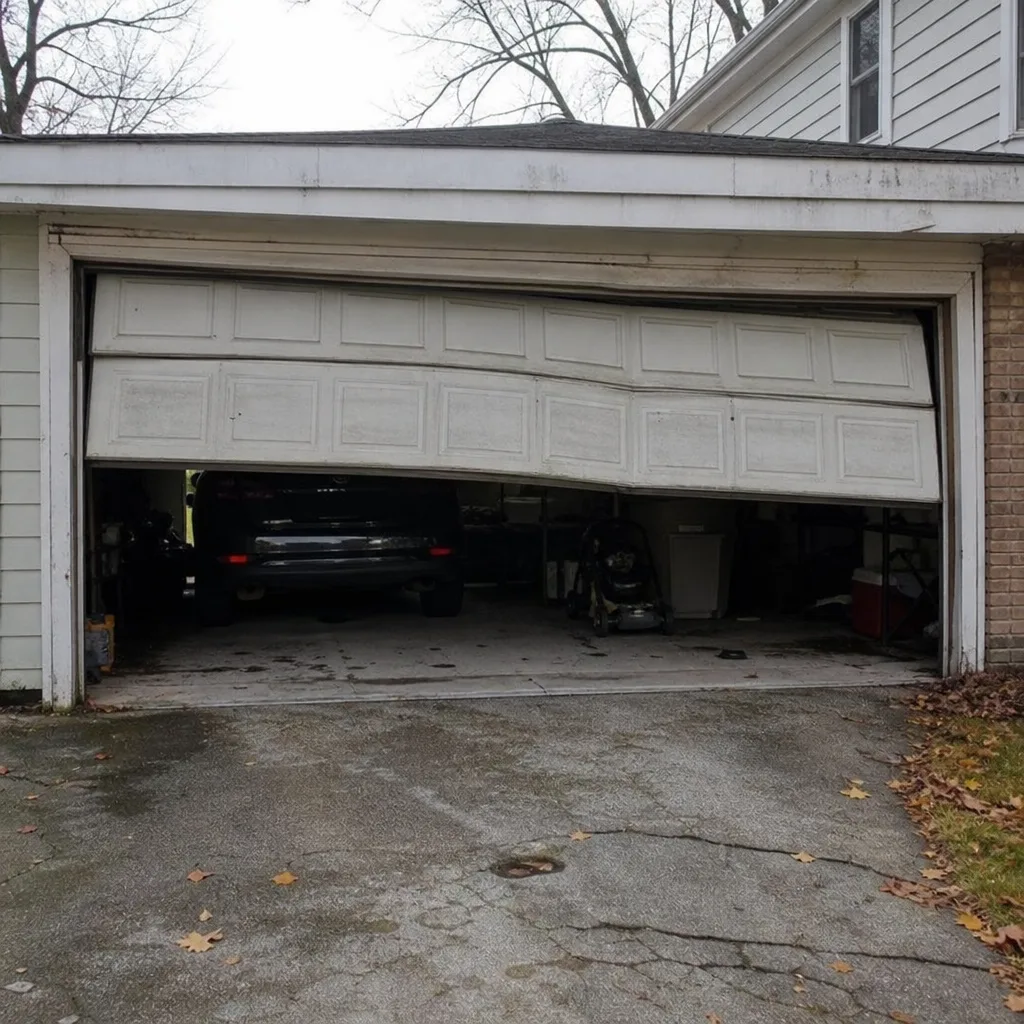 Before
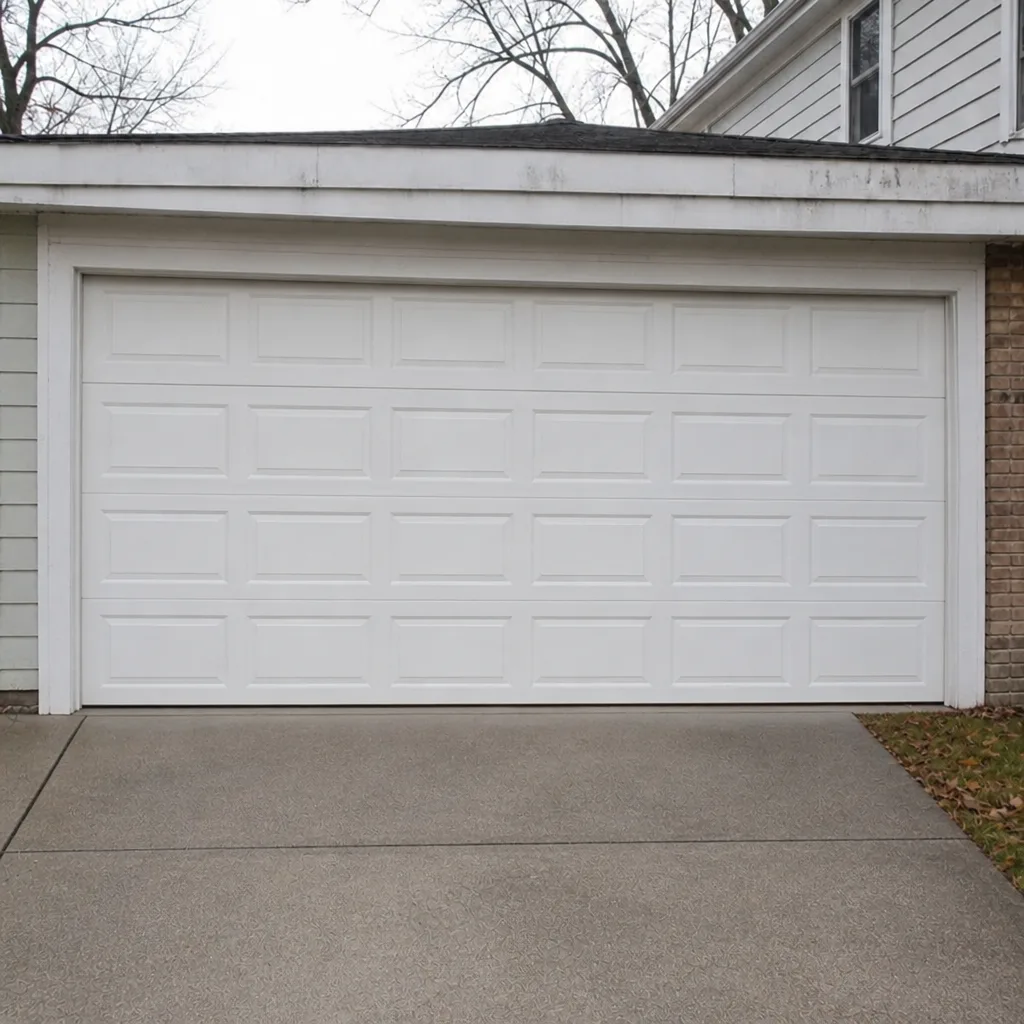 After
Common Mistakes to Avoid
- Trying torsion spring work as a first project. The energy stored in a wound spring is measured in hundreds of pounds and releases in a fraction of a second. This is the one task where the prior question “have I done something like this before?” matters more than any other, and the honest answer for most homeowners is no.
- Buying a “universal” replacement spring. Many garage door springs sold at the big-box store are categorized broadly. A spring that doesn’t match your door’s weight and configuration will fail sooner or cause opener strain, and the New Rochelle climate also drives seasonal movement that shortens that life.
- Forcing a stuck door open with a car jack or pry bar. A door that won’t rise on the tracks has bent or failed components that forcing only worsens. What was a track realignment becomes a full track replacement.
- Running the opener repeatedly after a spring breaks. The opener is not designed to lift the dead weight of an unbalanced door; running it repeatedly strips drives and burns out motors. A single attempt to see what’s happening, then stop.
- Cutting a cable under tension. A cable attached to a wound spring is carrying that spring’s energy. Cutting it without knowing how to release the tension first is dangerous and can cause serious injury.
- Ignoring a door that’s out of balance. A door that doesn’t hold at halfway is showing you that the springs are worn, which means the opener is carrying the extra weight. Catch it before it fails, not after.
- Assuming the fix is replacement. A broken spring, a worn roller, or a stripped opener gear on an otherwise sound door is rarely a reason to replace the door. Repair is almost always the lower-cost path when the door is otherwise in good condition, and we say so because it’s the right answer, not because it’s a sale.
When to Call a Professional
Call a professional the moment any of these are true, and don’t try to work around them: a torsion spring has snapped or is in visibly bad shape; a cable has come loose or is sagging; the door has come off the tracks; the door is crooked or binds against the frame; the opener strains and won’t lift the door; the door slams down rather than lowering at a controlled speed. Any of these signal stored energy or a structural failure that isn’t a DIY category.
Our technicians have up to 13 years of experience with this equipment, and our focus is repair first. Call New Rochelle Garage Door Repair Co for a free estimate in New Rochelle at (844) 385-8447. We’ll tell you what’s wrong, what it’ll cost, and whether a repair is honestly the right call over a replacement.
Frequently Asked Questions
No. Torsion spring replacement is not a safe DIY job because the spring holds stored energy under tension, and a slip can cause serious injury. This is the one task on a garage door where a capable homeowner is still at real risk. Call (844) 385-8447 for a professional estimate.
Yes, for the right tasks. Bottom seal replacement, roller swaps on extension-spring systems, remote reprogramming, and light bulbs are genuinely worth doing yourself because they involve no stored energy. Anything touching the springs or cables is where DIY stops being worth it.
It depends on the door and the spring configuration, which is why we don’t publish fixed prices. Every repair is quoted and agreed before any work starts, so you’ll know the cost before we begin. Call (844) 385-8447 and we’ll give you a free estimate.
We offer emergency garage door service for situations where a home is unsecured or a car is trapped. Whether we can reach you the same day depends on scheduling when you call. Call (844) 385-8447 to see what’s available.
It can be either. A worn gear in the opener and a failing spring both cause strain and noise, and the two can overlap. A technician can tell the difference in a few minutes. Call (844) 385-8447 for an estimate.
We’re trained on doors from Clopay, Amarr, Wayne Dalton, and Raynor, and openers from LiftMaster, Chamberlain, Genie, and Craftsman. If your system is one of those brands, we already know how it’s built and how it fails.
The Bottom Line
The DIY-versus-professional decision for garage doors isn’t about whether you’re handy. It’s about whether the component in front of you is storing energy. Bottom seals, roller swaps on relaxed systems, remote programming, and careful track alignment are fine to handle. Torsion springs, cables under tension, and major track damage are not. The cost math usually backs this up: DIY pays off on the small jobs, and a botched spring attempt costs more to correct than a service call would have. If the job involves springs or cables, call. We work on the door you have, and we’ll tell you straight whether a repair or a replacement makes more sense. For a free estimate in New Rochelle, call New Rochelle Garage Door Repair Co at (844) 385-8447.
Written by the team at New Rochelle Garage Door Repair Co.