Last updated November 22, 2026
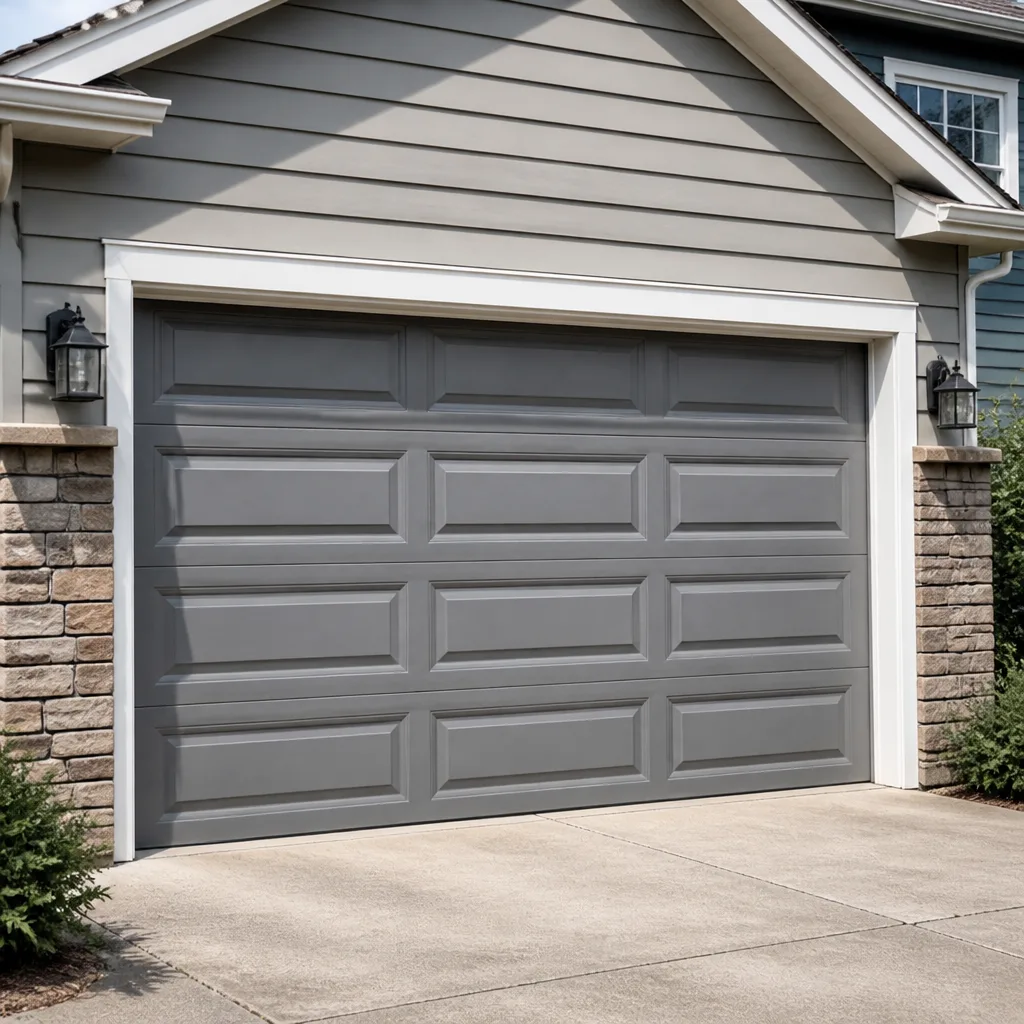 Raised-panel steel
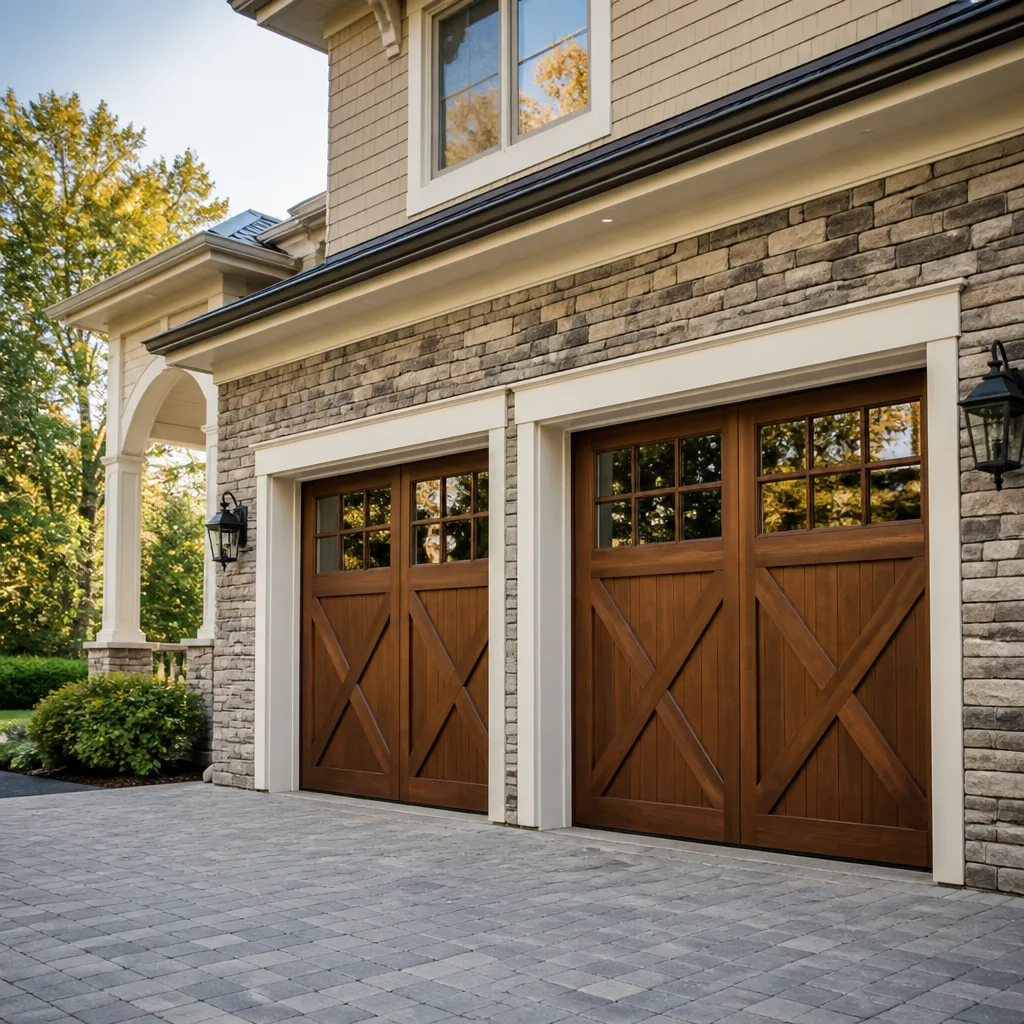 Carriage house
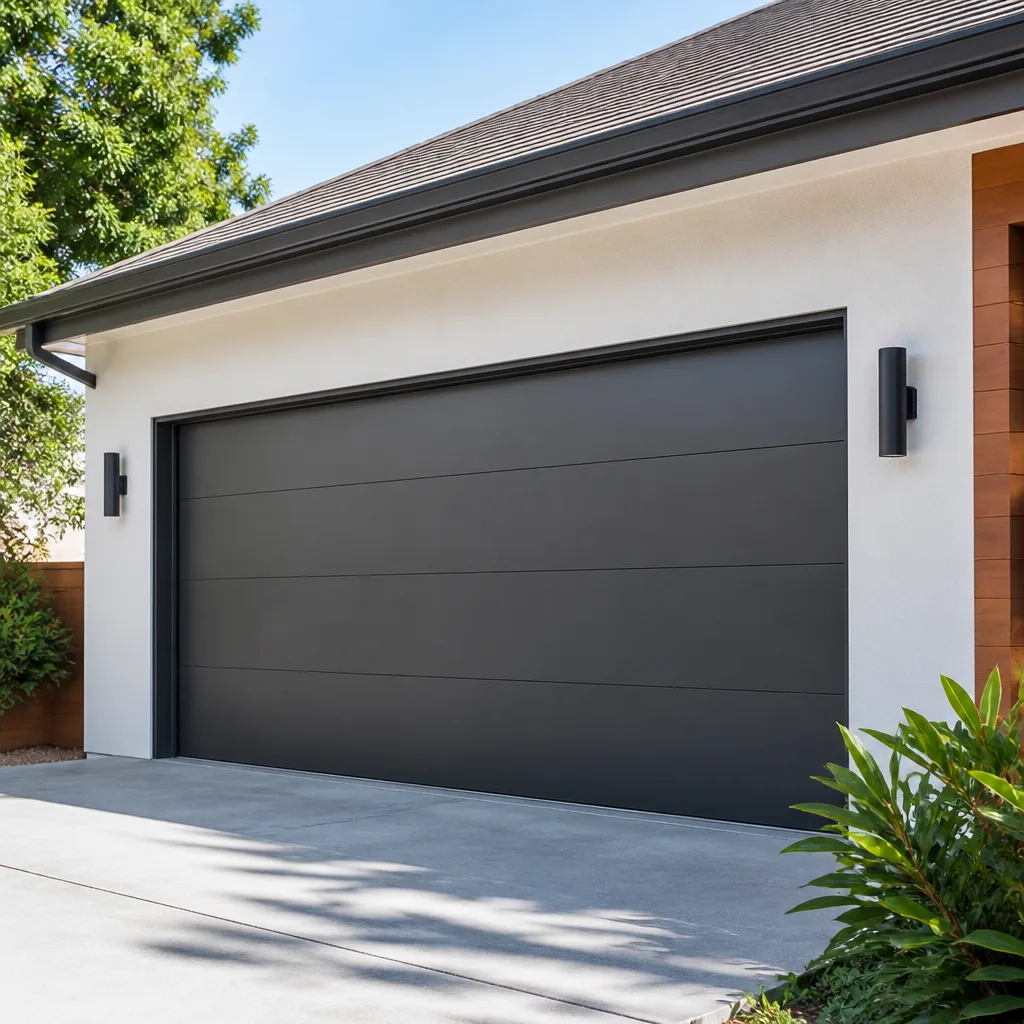 Modern flush
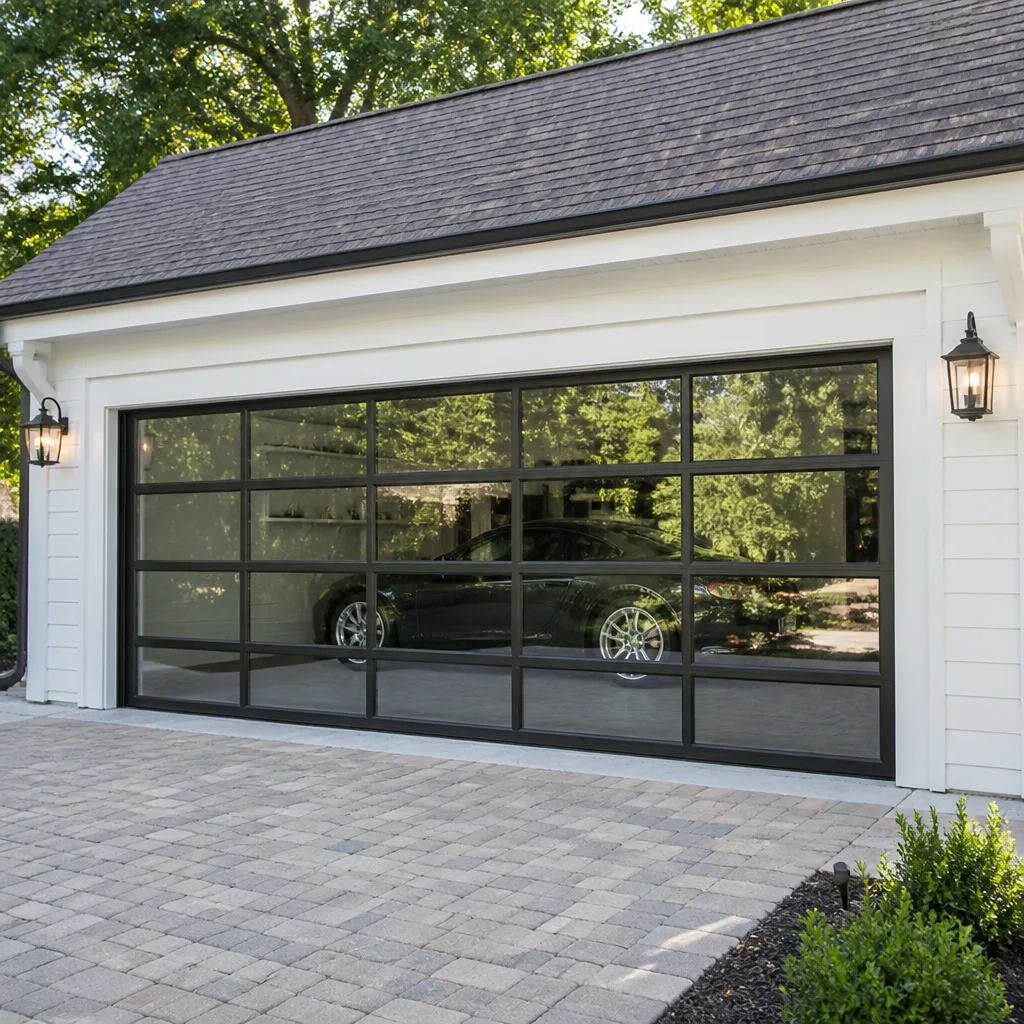 Full-view glass
 LiftMaster openers
 Chamberlain openers
Full 25-point door and opener safety check with every visit - springs, cables, rollers, tracks, and your LiftMaster or Chamberlain opener included
You get a price before we start. It does not change when the pro arrives.
Get your free estimateThe Complete Guide to Garage Doors in New Rochelle
New Rochelle has over 25,000 housing units, and a surprising number of them still run garage doors installed in the 1990s – hardware designed for a 15-year lifespan that’s now operating on borrowed time. Here’s the part most garage door guides get wrong: they’re written for generic suburban America, as if every door hangs in a flat, dry, uniform climate and every garage is the same box attached to a similar house. New Rochelle isn’t that. A pre-war attached garage in the North End and a newer build near the waterfront put very different demands on a door, a spring, and an opener. This guide covers how to read your own door’s context – the housing stock, the freeze-thaw cycle, the humidity swings, the opening dimensions older homes were built with – and how to maintain and repair what you have instead of guessing your way to a replacement. We work on the door you already own, and this is how we think about it.
Quick Answer
Most garage door problems in New Rochelle come down to worn springs, tired openers, or hardware corrosion from the freeze-thaw and humidity cycle – and most of them can be repaired rather than replaced. A door that’s structurally sound but aging (say, a 1990s steel door with a snapped spring and a slow opener) is usually a repair job, not a replacement one. The exceptions are doors with cracked or rusted-through panels, failed bottom sections, or non-standard opening heights where a new door would have to be custom-ordered anyway. The single most useful habit is to know the age, brand, and opening dimensions of your door before anything breaks, so you can make a clear-eyed fix-or-replace call later.
Styles & brands we work with
- Raised-panel steel
- Carriage house
- Modern flush
- Full-view glass
- LiftMaster openers
- Chamberlain openers
Table of Contents
- Why New Rochelle’s Housing Stock Changes Everything
- The Freeze-Thaw and Humidity Reality
- Attached vs. Detached Garages: What’s Different
- Steel, Wood Composite, or Aluminum: What Holds Up
- Why Non-Standard Opening Heights Limit Your Options
- Repair or Replace? A Decision Framework
- A Seasonal Maintenance Routine That Works Here
- Brands and Openers: What We See Most
Why New Rochelle’s Housing Stock Changes Everything
The first thing to understand about a garage door in New Rochelle is that the door is only half the story. The house around it determines what’s possible. New Rochelle has a wide spread of housing ages, and garage construction followed the eras. In older neighborhoods, you’ll find attached garages tucked under or beside the main structure, often built tight with low clearance above the door track and narrow single-bay openings. In newer construction, especially the larger homes built over the last couple of decades, you see wider double bays, taller openings, and more generous ceiling height.
That spread matters because garage door hardware is sized to the opening, not the other way around. A torsion spring is matched to the door’s weight. The track length is matched to the door’s height. The opener is matched to the door’s weight and the available headroom. When any one of those dimensions is unusual, the job stops being a parts-swap and becomes a measurement job.
In our experience across New Rochelle, the most common surprises are:
- Low headroom above the track where a standard torsion setup won’t fit and a low-clearance conversion is needed
- Narrow openings built before the era of standard 8-foot and 9-foot single-bay widths
- Doors hung on older hardware where the original spring was replaced with a mismatched one over the years
- Openers mounted decades ago that are now underpowered for a door whose weight has crept up with moisture and hardware wear
None of these are reasons to panic. They’re reasons to measure before you buy. A door that fits poorly or an opener running at its limit will fail faster, no matter how good the parts are.
The Freeze-Thaw and Humidity Reality
New Rochelle sits in a climate with genuine seasonal swings: cold winters that dip below freezing, warm humid summers, and a shoulder season where temperatures cross back and forth across the freezing line repeatedly. That freeze-thaw cycle is what wears garage door hardware faster than the door’s appearance suggests.
Here’s what happens in practice. Moisture gets into small gaps and seams in the door and the hardware around it. Overnight, that moisture freezes and expands. In the morning, it thaws. Repeated across a winter, that cycle works at hinges, rollers, and the pivot points on the track. Paint fails first at the bottom edge of the door, where water collects and sits longest. Steel rollers start to squeal. Hinges develop rust at the knuckle. The bottom weather seal hardens and cracks, which lets water in at the worst spot – the threshold, where it can sit against the bottom panel.
Summer adds its own stress. High humidity swells wood and wood composite doors, which can bind in the track. It also works on the steel sections of insulated doors, where condensation forms on the inside face of a cold panel. That internal moisture is invisible from the driveway but shows up as rust streaks on the inside of the door after a few seasons.
What this means for a New Rochelle homeowner:
- Inspect the bottom seal every fall before the first hard freeze and replace it if it’s cracked or compressed flat
- Lubricate hinges, rollers, and the torsion spring with a garage-door-specific lubricant – not general-purpose oil – at the change of each season
- Look closely at the bottom panel and the bottom corners of the door for paint failure, which is the first sign moisture is getting in
- Check that the door sits level on the floor and closes evenly across the full width, since warped or swollen panels show up as gaps at the threshold
A little seasonal attention extends the life of the hardware noticeably. Ignoring it is what turns a ten-year door into a six-year door in this climate.
Attached vs. Detached Garages: What’s Different
Whether your garage is attached to the house or a separate structure changes what a garage door does, and not just in cosmetic ways. An attached garage is a shared wall with the living space, and that shared wall is treated differently in building and fire code. The common wall between an attached garage and a house has to provide fire separation, and the door and its hardware are part of that assembly. If the wall or the door between the garage and the house has been modified, replaced with a hollow-core door, or opened up with a pet door, the separation is compromised.
Practically, that means:
- A garage door replacement on an attached garage should preserve the existing fire-separation details, and if any of those details are unclear, it’s worth asking your city’s building department how they view it
- On older attached garages in New Rochelle, you often find the original separation wall intact, but the interior garage door (house to garage) has been swapped for a lightweight one at some point – worth checking
- Attached garages are more likely to be conditioned, or at least partially insulated, which affects the inside face of the door and can drive condensation
A detached garage doesn’t carry the same fire-separation requirement to the house, so the door itself is more about weather protection and security than code. It also tends to be less insulated, which means the door gets a wider temperature swing and more condensation on both faces. In our experience, detached garages in New Rochelle see more rust on the bottom panels and more frozen-in-winter track issues, simply because they’re colder and damper than attached ones.
If you’re unsure whether a change to your attached garage door or its surrounding wall affects fire separation, ask your city’s building department before doing the work. It’s the kind of question that has a clear answer locally, and the cost of getting it wrong is real.
Steel, Wood Composite, or Aluminum: What Holds Up
Given the climate, the material of the door matters more than the brand. Here’s how the three common residential types hold up in New Rochelle specifically.
Steel is the most common door material in this market and the best all-rounder for the climate. It resists the freeze-thaw cycle well as long as the paint and bottom seal are maintained, and it holds its shape through humidity swings. The weak point is moisture getting into seams and behind the panel skins, which starts corrosion at the bottom edge and around the hardware. An insulated steel door is a good fit for attached garages. This is the material we’d pick first for most homes here.
Wood composite (engineered wood panel doors) looks the part and is popular on New Rochelle homes where the garage faces the street and design matters. It handles the freeze-thaw cycle better than solid wood, and the composite core resists swelling. The trade-off is that it’s heavier, which puts more demand on the springs and opener, and the bottom edge needs more attention because water collects there. If a composite door is well sealed at the bottom and repainted on schedule, it lasts well here. If it’s ignored, it swells and binds.
Aluminum is light and won’t rust, which sounds ideal, but in this climate the weakness is dents and finish degradation. Aluminum doors are more prone to impact damage and to the finish flaking off at the panel edges where moisture gets in and freezes. They’re a reasonable fit for a detached garage or a sheltered opening, less so for a street-facing door that takes the full weather.
A quick comparison:
- Steel: best durability for the climate, needs paint upkeep, insulated versions are the go-to for attached garages
- Wood composite: best appearance, heaviest, needs bottom-edge sealing and scheduled repainting
- Aluminum: lightest, corrosion-resistant, but dents and finish failure are the weak points here
Why Non-Standard Opening Heights Limit Your Options
This is one of those things new homeowners in New Rochelle discover the hard way. A large share of the housing stock predates the standardization of garage door opening heights, and older homes often have openings that don’t match the common heights sold off the shelf. If your opening is shorter, wider, offset, or has low headroom above the track, a standard replacement door won’t fit the space.
The result is that a homeowner who assumed a replacement was a simple order discovers the door has to be custom-sized, and custom-sizing changes the lead time and the price. That’s one reason we so often recommend repairing the door you have if it’s structurally sound: a custom replacement is a bigger commitment than the failing part on the door you own.
Here’s how to know before you’re caught out:
- Measure the opening in three places – top, middle, and bottom – for width, and on both sides for height
- Measure the headroom above the top of the door to the ceiling or nearest obstruction, and the side clearance on each side of the track
- Measure the depth of the garage to the back wall, which affects how the door travels when open
- Note the brand and model if you can find it on the door or opener, since some legacy sizes map to standard replacements and some don’t
Those numbers – not the door’s appearance – tell you what you can actually install. If any of them are unusual, you’ll want those measurements in hand before you get a quote. For most repairs, though, the opening dimensions are only relevant if the door itself is coming out. For a spring or opener job, the existing hardware and the door’s weight are what matters, and the opening size is not an obstacle. You can read more about the day-to-day approach in our garage door repair service.
Repair or Replace? A Decision Framework
This is the question that drives most of the calls we get, and it’s the one homeowners have the least unbiased information about. There’s no shortage of garage door companies whose business model makes a replacement the easy answer. We repair what’s broken and replace only when it’s the right call, and here’s the framework we use to make that call on a New Rochelle door that’s aging but not obviously finished.
First, separate the door from the hardware. The door panel assembly and the torsion/extension spring system are different things with different lifespans. A 1990s door with good panels and a snapped spring is a repair job. A 1990s door with rotted bottom sections and delaminating panels is a replacement conversation, because the structure has failed and repairing around it doesn’t fix the underlying problem.
Second, check the structural elements:
- Bottom panel: is it rusted through, split, or sagging? (The bottom section takes the most moisture and is the first to fail.)
- Panel skins: are they delaminating, cracked, or separating from the rails and stiles?
- Track: is it bent, misaligned, or rusted through at the floor?
- Hinges and rollers: are the mounting points still solid, or has the metal around them torn?
If the answer to all of those is “the structure is sound, the hardware is tired,” you’re looking at a repair – springs, rollers, hinges, opener, maybe the bottom seal. That’s a normal New Rochelle job and typically doesn’t require the door to come out.
Third, weigh the repair against the age of the door as a whole. If a door is many years past the point where the panels are still serviceable, and the repair list starts to include structural parts, the math flips. But most aging doors we see in New Rochelle are past the “hardware is done” stage, not past the “door is done” stage. That distinction is the whole game, and it’s what a proper diagnostic visit sorts out.
If a spring is the failure, the repair is a specific one with real safety stakes – covered in our garage door spring repair page. If the door won’t move or the opener is dead, that’s a different diagnostic path. The goal in both cases is the same: repair first, replace only when it’s genuinely the right call.
A Seasonal Maintenance Routine That Works Here
A garage door is a mechanical system with springs under load, rollers that need to turn freely, and a track that needs to stay aligned. The climate here works against all three. A routine that matches the season keeps the system in service longer and surfaces problems before they become emergency repairs.
Here’s a sequence that works for a New Rochelle door. Do the visual checks and lubrication yourself; leave anything involving the springs to a professional.
- Every season, check the balance. With the door closed, pull the manual release and lift the door halfway by hand. It should stay there on its own. If it drifts down or is heavy to lift, the springs are out of balance and need professional attention.
- Every season, the rollers and hinges. Inspect for flat spots, cracks, and rust. A steel roller with a flat spot is one failure away from a stuck door. Lubricate the hinges and the pivot points with a garage-door-specific spray, not general-purpose oil, which attracts grit.
- Every fall, before the first freeze, the bottom seal. Check for cracks, compression, and gaps at the floor. Replace if the seal is no longer making contact across the full width. A failing seal is the main entry point for water that corrodes the bottom panel.
- Every fall, the track and the door’s movement. Watch the door open and close. It should move evenly with no shuddering, no binding on one side, and no gap at the floor when closed. Any binding points to a track or roller problem that will get worse with cold.
- Every spring, the paint and weather seal. Look at the bottom edge and corners for paint failure. That’s where water sits. Touch up early. Check the perimeter weather stripping for gaps that let in weather.
- Annually, the opener and safety reverse. Test the safety reversal by putting a modest obstruction in the door’s path and watching it reverse. Test the opener’s balance by lifting the door manually with the opener disengaged. If anything is off, it’s an opener service call, not a parts swap.
That routine takes less than an hour a season and catches the problems that turn into emergency calls. We can handle any step you’d rather not do yourself, and our garage door opener repair service covers the opener side of the routine. Spring work, though, is not a do-it-yourself job in any season, for reasons we’ll get to.
Brands and Openers: What We See Most
Brand fluency matters more than homeowners expect, because the failure modes and the parts differ across the major brands. We’re factory-familiar with eight of the most widely installed brands in residential use – LiftMaster, Chamberlain, Genie, Clopay, Amarr, Wayne Dalton, Craftsman, and Raynor – and that means no learning curve when we show up. If your door or opener carries one of those names, we’ve seen the specific way it fails and the specific parts that fix it.
On the door side, Clopay, Amarr, Wayne Dalton, and Raynor cover most of the steel and composite doors we work on in New Rochelle. Each has its own approach to panel construction and its own hardware patterns, and knowing which is which shortens a diagnostic visit considerably.
On the opener side, LiftMaster and Chamberlain (which share engineering heritage) and Genie and Craftsman are the brands we see most. The modern ones add app control and connected features, which sounds like a convenience until the app stops talking to the opener and the door won’t open from the driveway. That’s an opener repair, not a door problem, and it’s a growing share of the calls we get. If you have a LiftMaster or a Chamberlain opener with a Wi-Fi module that’s stopped responding, or a Genie that runs but won’t close, the fix is usually in the opener and its sensors, not the mechanics of the door itself. The good news is there’s rarely a brand out there we don’t recognize on sight, so the diagnostic starts with the brand, not from scratch.
Common Mistakes to Avoid
- Replacing the door when the hardware is the problem. A door is a frame of panels; the springs, rollers, and opener are what move it. If the panels are sound, the repair is usually in the hardware. Replacing a sound door because it stopped moving is the most expensive way to solve a $200 problem.
- Assuming a standard replacement door will fit. Older New Rochelle homes often have non-standard opening heights, and a replacement door has to match the opening. Measure before you order, not after.
- Trying to adjust or replace your own springs. Torsion and extension springs are under high tension. They’re the single most dangerous component on a garage door and, in our experience, the part a homeowner should never touch. Call a professional.
- Greasing the track. The track is not the place for lubricant: clean it, don’t grease it. Lubricant goes on the hinges, rollers, and spring, not the track surface, where it attracts grit and jams the rollers.
- Ignoring the bottom seal and the bottom panel paint. In this freeze-thaw climate, that’s where water sits and where all the corrosion starts. A cracked seal left through a winter is how a good door gains a rust problem.
- Closing an attached garage’s fire separation with a standard door or modifying the wall. The common wall between an attached garage and the house carries fire separation. Changing it without checking with your city’s building department can compromise that.
- Replacing an opener to fix a door that jumps the track. A door that racks, binds, or jumps its track is a door and track problem. A bigger opener makes the symptom worse, not better.
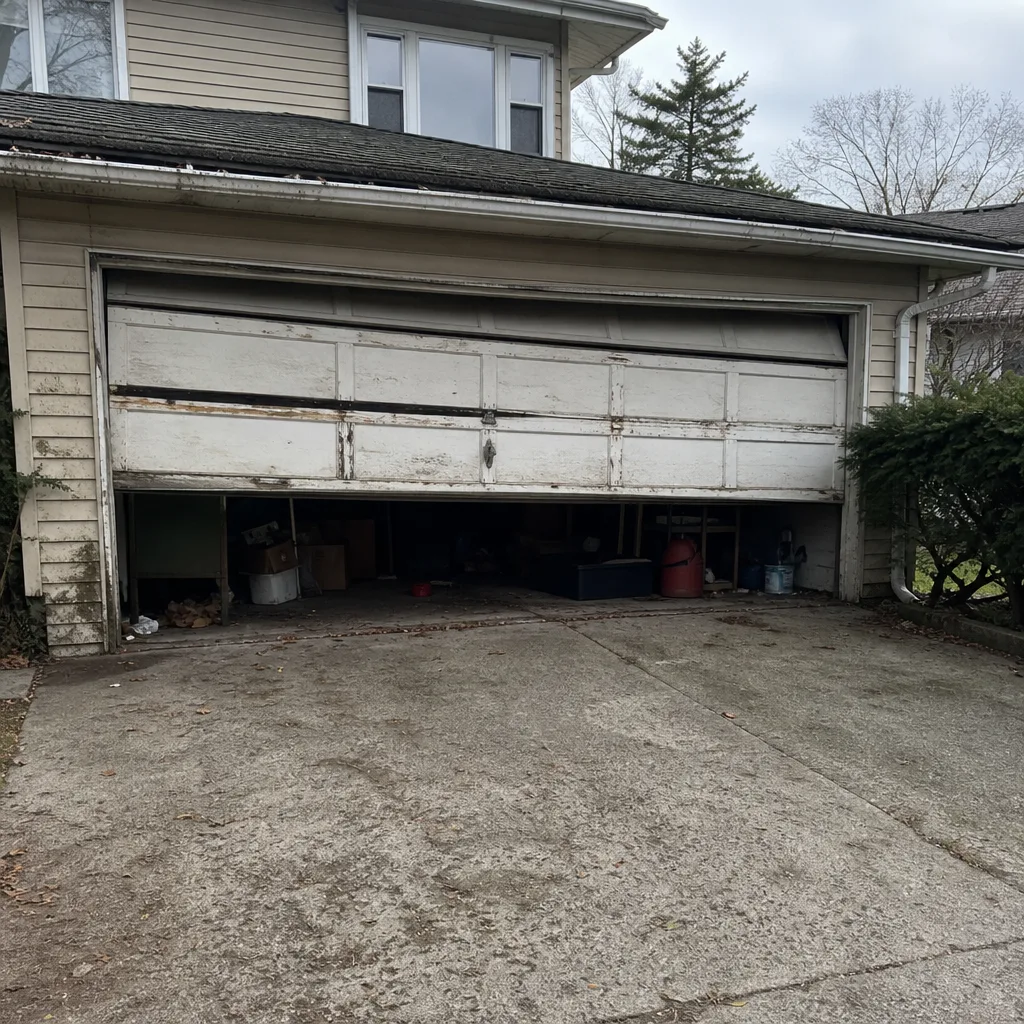
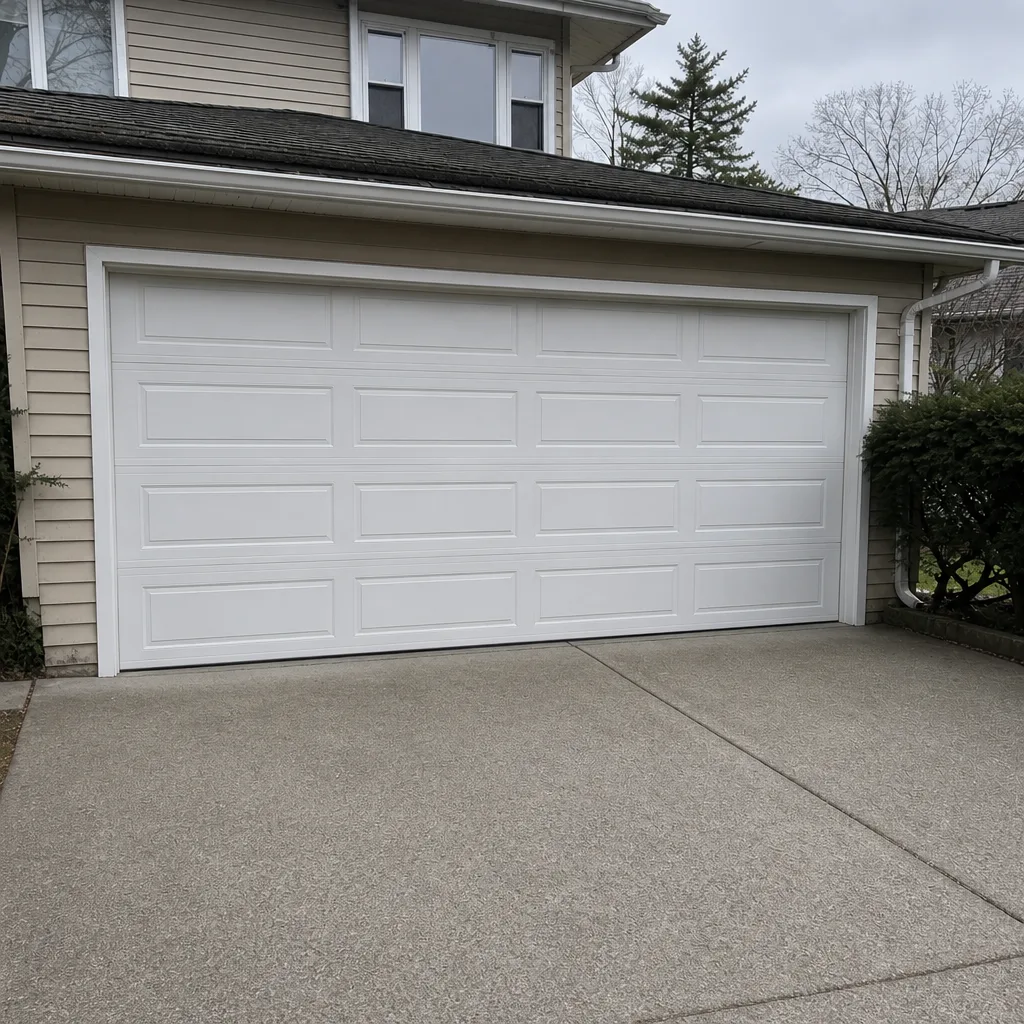
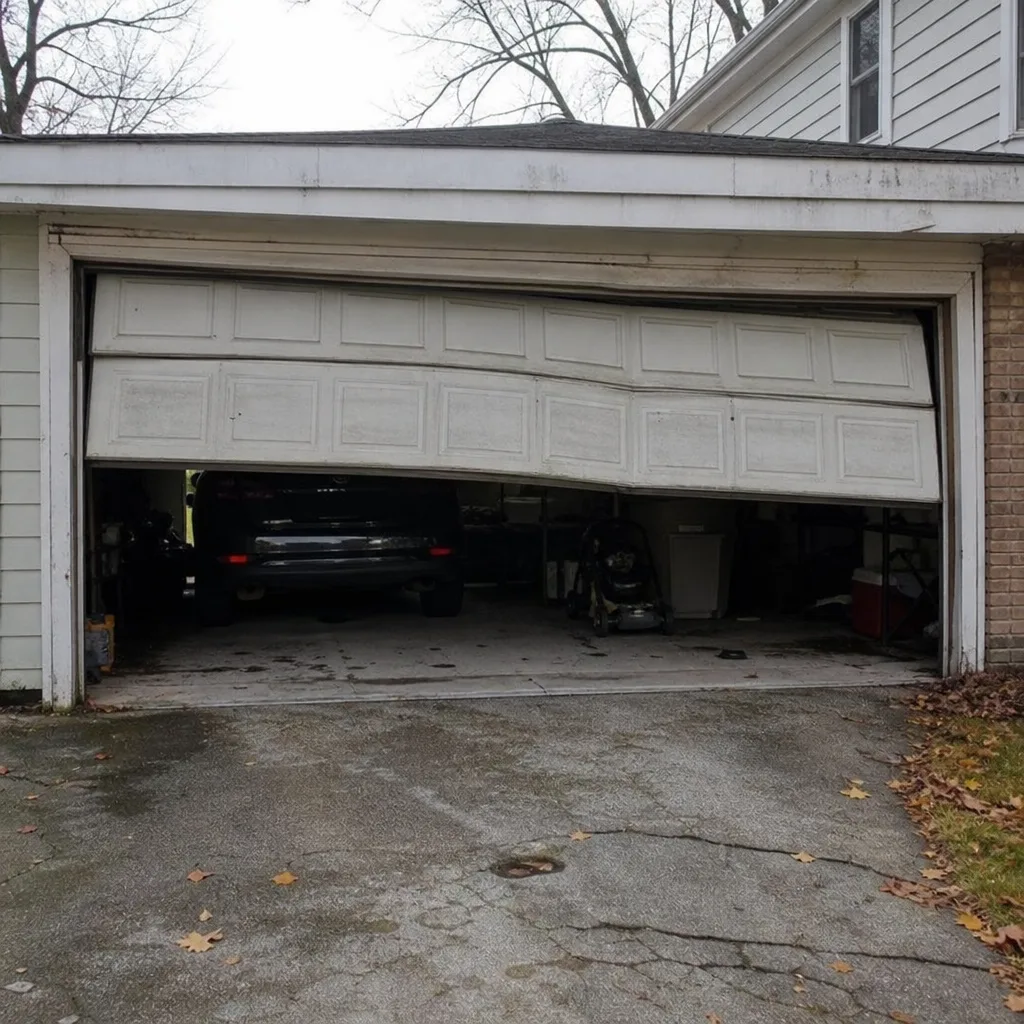
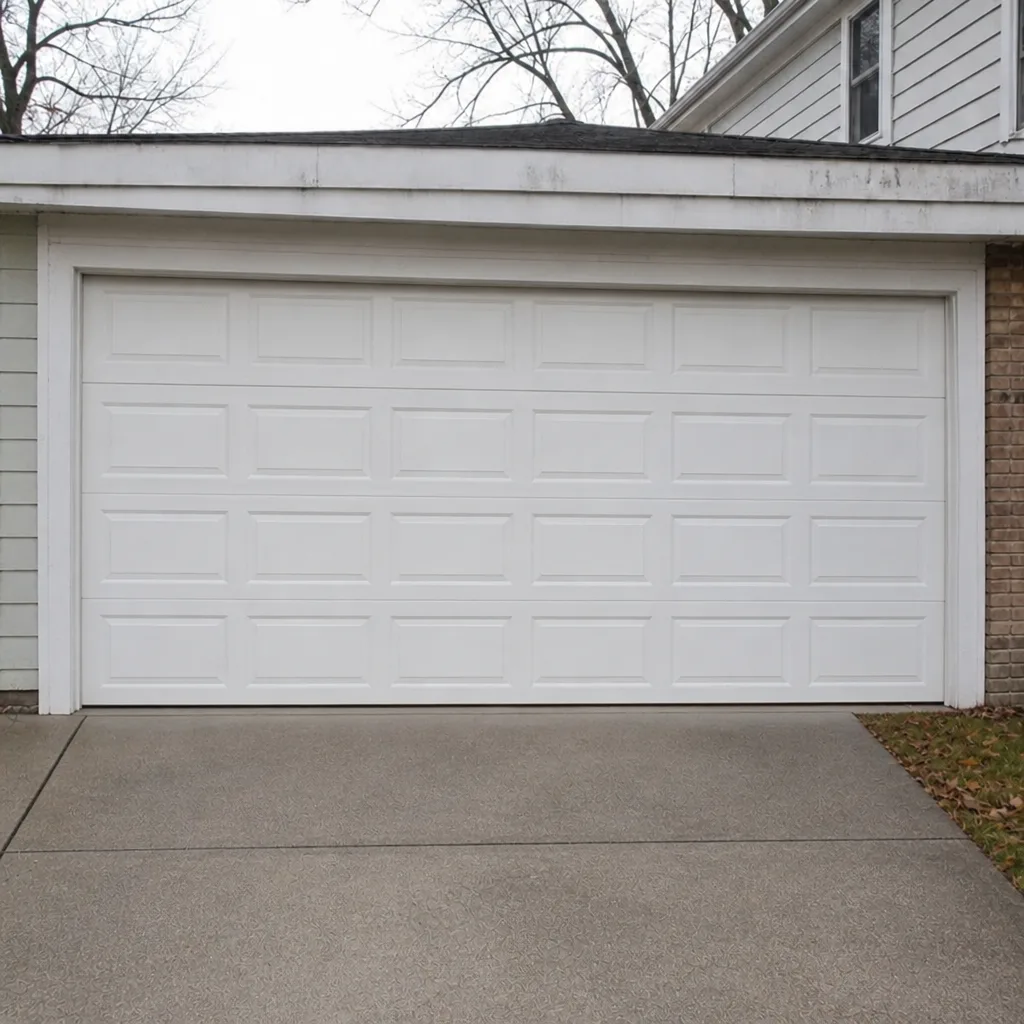
See the difference
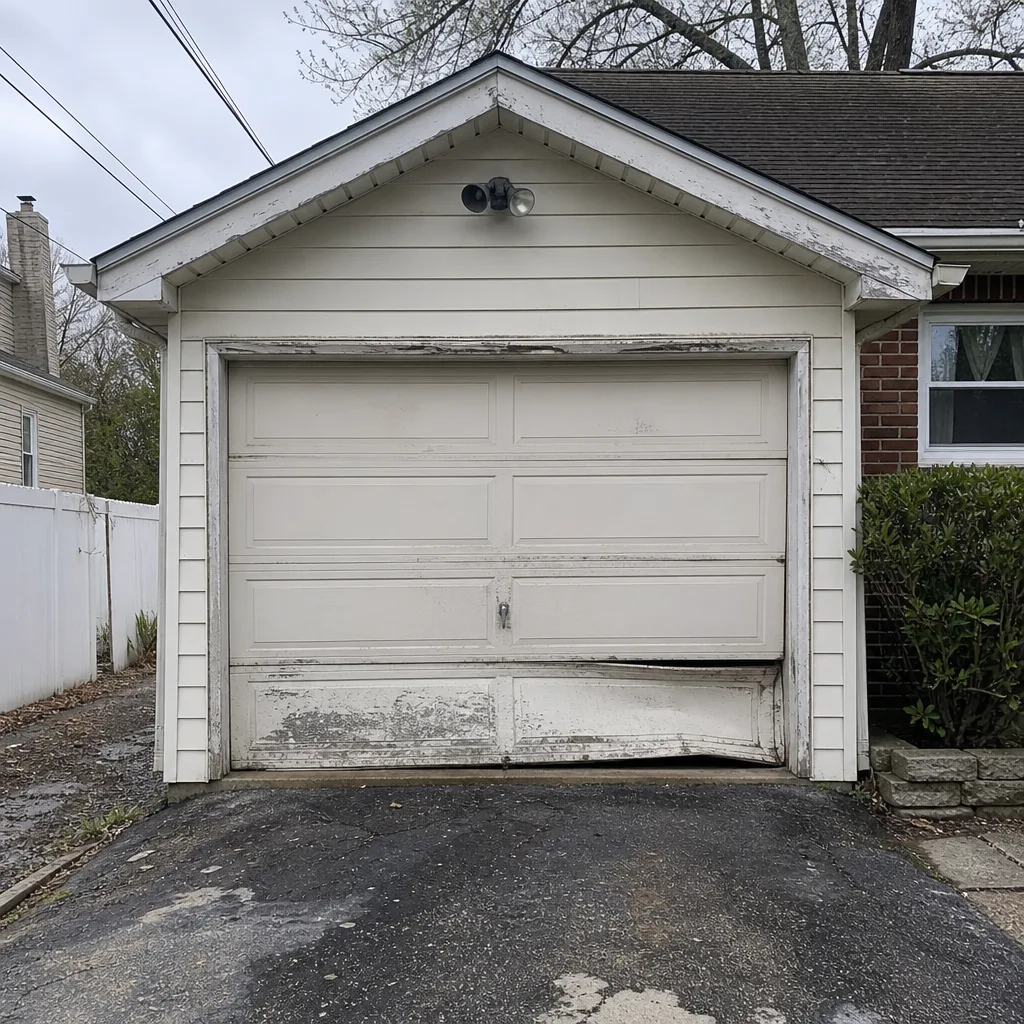 Before
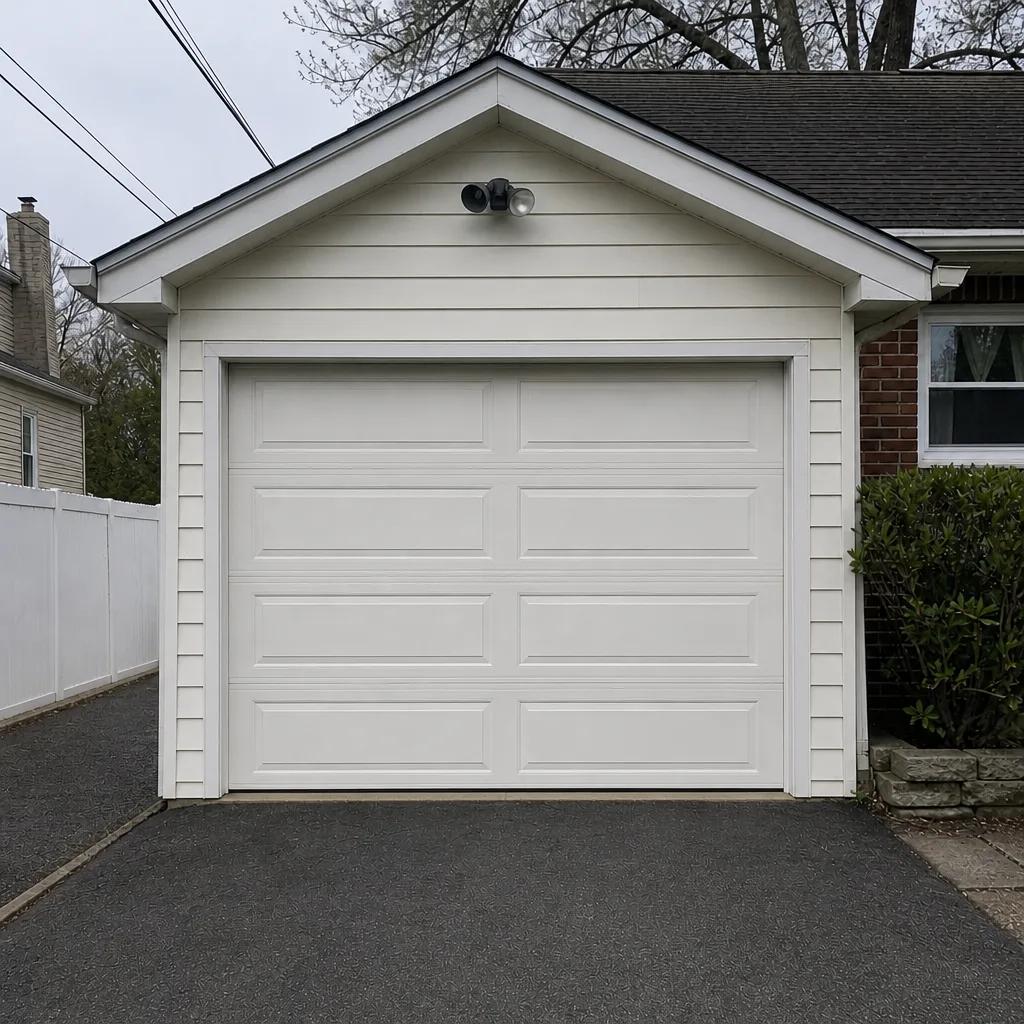 After
 Before
 After
 Before
 After
When to Call a Professional
Some garage door work is within reach for a careful homeowner: lubrication, a bottom seal swap, a visual inspection, a safety-reverse test. The repairs that need a trained professional are the ones with real forces and real stakes. Call before you dig in if any of these are true: your springs have snapped or the door is suddenly too heavy to lift; a cable is loose, frayed, or snapped; the door has jumped the track or is hanging unevenly; the opener runs but the door won’t move, or the door stops partway; you notice a creaking, popping, or snapping sound from the torsion area; or an attached garage’s door no longer closes cleanly or the fire separation looks compromised. Each of those is a diagnostic job, and several are genuinely hazardous to handle without the right tools and training. New Rochelle Garage Door Repair Co offers free estimates in New Rochelle – call (844) 385-8447. Our technicians have up to 13 years of experience, and emergency service is a real offering for the situations where a broken door leaves a home unsecured or a car trapped.
Frequently Asked Questions
Repair costs depend on the job: a spring replacement, an opener issue, a track realignment, and a roller replacement are different jobs with different parts and labor, so there’s no single number for “garage door repair.” The written estimate you get after diagnosis sets the final price, and it’s quoted and agreed before any work starts. Call (844) 385-8447 for an exact quote – estimates are free.
It needs to account for the local housing stock and climate. New Rochelle has a wide range of garage opening heights from older homes, a real freeze-thaw and humidity cycle that accelerates corrosion and bottom-seal wear, and both attached and detached garages with different fire-separation considerations. A generic guide talks about the door; a New Rochelle guide has to talk about the house around it.
In many cases, yes. Spring repairs, opener repairs, and track realignments are the kind of work we can often handle on a same-day basis, and we offer emergency service for urgent situations where a broken door has left a home unsecured or a car trapped. Call (844) 385-8447 and we’ll talk through what’s happening and book accordingly.
The local professional who arrives is licensed and insured as their state requires, and our technicians have up to 13 years of experience. We work on the door you have, across the major brands, and we repair first and replace only when it’s the right call.
If the door’s panels and structure are sound and the problem is the hardware (springs, rollers, opener, track), repair is usually the right call. If the door’s bottom sections are rotted, the panel skins are delaminating, or the mounting points are torn, replacement becomes the honest answer. The difference is a diagnostic question, and it’s exactly what a proper visit sorts out. Call (844) 385-8447 for a free estimate.
The price is quoted and agreed before any work starts, so the written estimate is the price. If the diagnosis turns up something different once we’re standing at the door, we’ll tell you and re-quote before doing the work – never after. Call (844) 385-8447 to get started.
We’re factory-familiar with eight of the most widely installed brands in residential use: LiftMaster, Chamberlain, Genie, Clopay, Amarr, Wayne Dalton, Craftsman, and Raynor. That covers most doors and openers in New Rochelle, and it means the diagnostic starts from a known failure pattern rather than from scratch. For a service overview, see New Rochelle Garage Door Repair Co.
The Bottom Line
New Rochelle’s garage doors live in a specific context: a spread of housing ages, a real freeze-thaw and humidity cycle, and a mix of attached and detached garages with different requirements. That context is the reason a garage door guide written for generic suburban America falls short here. Know the age and brand of your door, measure the opening before you consider a replacement, keep the bottom seal and the moving hardware in shape through the seasons, and treat any repair as a diagnostic question about the hardware versus the door. Most aging doors we see in New Rochelle need repair, not replacement, and that’s the order we approach every job in.
If something on your door is broken, stuck, or noisy, we’re set up to look at it quickly. We work on the door you have, we’re factory-familiar with the brands most New Rochelle homes carry, and we quote and agree the price before any work starts. Spring work, opener issues, and doors that have jumped the track are all in the scope of our garage door repair service, and our garage door spring repair team handles the most safety-critical component with the care it demands. Call (844) 385-8447 for a free estimate and let’s get your garage door working again.
Written by the team at New Rochelle Garage Door Repair Co.